
Residence Time Distribution Curve analysis and interpretation – A powerful tool to monitoring the “health” of glass melt and the furnace the same, and to prevent unwanted effects on the quality of final glassware product.

Independently on the type of glass we are going to produce, or which kind of furnace we are going to install, the final quality of our glassware product might be affected by a huge reject due to dimensional instability or cosmetical defects, which are both linked to the quality of the glass melt in terms of physical and chemical homogeneity, thermal stability, aging of contact glass refractories and turnover time of the melt inside refractory tank (furnace).

However, the temperature profile is taken under control by continuous monitoring with a series of thermocouples installed on precise spots along furnace and distributors. Also the pull rate is continuously monitored, directly and indirectly by the production ratio, but for what concern turnover inside of the furnace, homogeneity of the melt and how it is distributed inside from the loader to the throat, and if there are created some stagnant zone or short circuit, those parameters, together with chemical analysis of the glass, would not be enough in the majority of the situations.

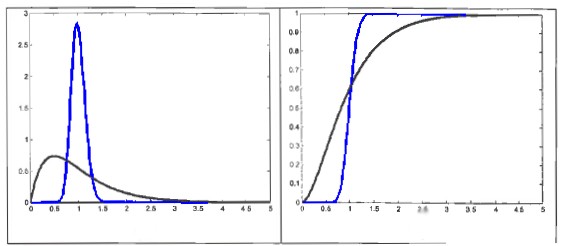
Just to evaluate the behavior of the glass melt in the furnace (related to furnace type, shape, aging, profile) a powerful tool is the so called “Residence Time Distribution Curve”.  As the name well explain a Residence Time Distribution Curve (RTDC from now) is exactly a curve which trace a concentration of a certain element (tracing agent) in a series of glass samples collected along the process (generally  cold end samples).
 

RTDC

Fig1: on the left RTDC piston flow(blue) and mixed(black). On the rigt Transition Function


First of all it is important to create a RTDC  by using a tracing agent (Ta) to add to molten glass. As Ta it is possible to use a chemical element not comprising in the batch pack, in a correct quantity to be detectable, but also to not affect glass properties avoiding

  • modification in flux inside the furnaces,
  • problems in forming zone,
  • variation of typical characteristics of final product (transition metals are to avoid due to colouring properties, also in low concentration; in addition Iron is usually already present around 100 – 150 ppm as baseline, coming from stainless steel  and raw materials contamination).

Other plus should be that the relative available raw material have to be as simple as possible (oxides best choice).

Depending on detection methods it is possible to use alkali or earth or metallic oxides such as Sr2O, ZnO, MgO (when not used as modifier or were Dolomite is not a batch component) or SnO2; all of them are relatively cheap and easily melted, do not change glass colour, are easily detectable by chemical analysis and  they do not give any contribution in glass properties variation in the quantity needed.

ZrO2 it is not a good choice because it is hard to melt and could give inclusions revealed as defects in cold end than rejected, and secondarily it is the main component of contact glass refractories so it would be not effective as Ta. Another good choice it is CeO2 that wherein the glass, show an intense fluorescence activity under special lamp, which help to obtain a RTDC in a fast way. For what concern the best quantity to use to obtain a valuable RTDC, it is necessary to consider, the detection limit of available analitycal technique and than the total quantity of molten glass bath; a general acceptable starting point should be 10 kg of oxide / 100 tons of melt that correspond to 100 ppm (part per million) if all melt is conditioned immediately by all the Ta.

Ta have to be introduced directly in the loader as empty as possible just to prevent unwanted dilution and/or delay. Since introduction of Ta in the loader, it is necessary to start to collect sample in cold end by a scheduled plan, labeling each samples with day, time, line. Frequency of sampling is not fixed but is decided based on experience (low frequency till first show, high frequency to the peak, low frequency again is one possibility); the same for what concern total time of RTDC, even if it is always a good choice at least 3 turnovers time (depends on total molten glass and pull rate). Each of those choices could affect the resolution of the RTDC, of course the deep of possible analysis and the reliability of results. It is clear that for all the time of RTDC test.  the pull rate should have to be maintained as stable as possible.

Last advice is related to cullet: for all RTDC test time it is important to not reuse the cold end cullet to prevent cross contamination and results mystification. In theory it is also possible to use a combination of Ta (two is more common) especially when there are more than one loader, to tracing different loading zones flux and effects.

Once we have obtained RTDC it is necessary to analyze and “translate” the results to recover any available information. Tipical RTDC has a shape as following:

realRTD

Fig2: some examples of realistic RTDC


The shape give immediately an information on the grade of mixing of molten glass: ideal piston flow is typical for unmixed process (quantic flow) where the “packet “ of batch (and than glass) flows along the tank without mixing.  The shape associated to a well mixed process, is more likely close to second one; in this case the sample relative concentration of Ta is lower  and also the peak is less pronounced, and it is exactely due to mixing process (convective back flow, etc.) that promote the conditioning of all the molten bath.

The main 2 parameters to consider to well interpretate the RTDC are:

–        time of first appearance of Ta, the so called First Show or Minimum RT

–        time of the appearance of maximum concentration of Ta, the so called Peak or Maximum RT

Relative position of this 2 points, comparing along the campaign could give a first qualitative information regarding furnace mixing process and flows. To go deeper in the analysis it is important to consider other factors such as:


         Normalized time. To have a repeatable and comparable RTDC time has to be normalized considering so called geometrical resident time or turnover time (τ) obtained considering the total amount of molten glass in the tank and the pull rate for example 100 tons of melt by 2 tons/h of pull rate means a τ = 50 h. By converting time in % of τ it is  possible recover much more information from our RTDC as for example if there is some preferential track in the tank, some stagnant zones, more flows (more spikes) and also if the real process is a combination of flows (piston + mixed) and in which ratio.

–          FWHM (Full Wide at Half Maximum). Last parameter I would suggest, is not a common one but it is  based on my experience and I have verified how it might be interesting. The over mentioned FWHM is a typical parameter used in spectroscopy or Physics and Chemistry to evaluate a peak or a “spike” in optical or electronic analysis. This number is obtained considering on the curve (spike) the 2 points that show approximately the half height of the maximum and measuring the delta in terms of time. This number is the so called FWHM that give information on the shape of the spike and consequently on the “resolution” of the signal. Applying this concept to RTDC, it  is clear how well It is possible to evaluate what happen before the Peak  (with First Show principally) but also after the appearance of the maximum concentration of Ta. This parameter can give to Technologyst all the informations regarding how the eventual spike is thin and resolute (piston flow ideal) or if the peak is broad and how is the magnitude of this effects. It is possible to better understand preferential track associated to stagnant zones, mixing grade, delay, or some unwanted cross contamination.

In effect, process to obtain RTDC is a sort of “Chromatography”, where the stationary phase and mobile phase are still the molten glass. Ta is the component that carried by mobile phase which become in contact with stationary one. The interactions and mixture between Ta and glass determine the shape of RTDC. In the same way the chemical affinity between component and stationary phase in Chromatography define the detection time and peak (spike) shape: in RTDC the “affinity” is translated in “mixing grade” and is strictly correlated to melting process, technical parameters and to the furnace situation (design and aging).
Residence Time Distribution Curve analysis

Determination of Al release, from dental cartridges and glass tubing. An effective and convenient tool to discriminate among different glass tubing manufacturing processes.

As described in the previous so called article “How tubular glass manufacturing process can affect the final product stability and technological improvement to mitigate it. Al – Epinephrine interaction: a related example. ” the Aluminum release from inner surface of glass containers become a key factor when the shelf life (or activity) of the contained API results to be highly sensible to Aluminum concentration, and in many cases, the release of this element could be dramatically correlated to the glass tubing manufacturing process. To be able to discriminate which glass manufacturing process might guarantee the best performances, it is necessary to define a strong enough analytical protocol (routine) which start from sample selection, sample preparation and correct manipulation (to avoid any unwanted contamination), passing through the definition of correct analytical set point (reagents, temperatures & times, instrument choice) until to definition of evaluation grid with limits and acceptability range.

In general, to obtain an effective analytical method optimization, it is necessary to define a correct Design Of Experiment (DOE) considering all the possible direct variables that could affect the results or performance is going to be investigated, and how many levels for each variable I think to investigate (reasonably based on experience and knowledge of process variability); result will be a Matrix of experiment which gives the number of trials needed.

The described methodology, voluntarily reported only as a general overview and not as detailed procedure, has been developed after testing different sets of glass tubing, produced with 3 different manufacturing processes (Vello, Coated Danner, Uncoated Danner) and the respective sets of cartridges, performing analysis with different analytical equipment and different extractable solutions (more than 180 different samples analysed). Conditions set up in order to simulate the aging and consequently to promote the release in acceptable time, involved the sterilizing cycle, performed by using an autoclave in the following conditions: 60 min, 121 +/- 1 °C, 1 bar, commonly used to test the Hydrolytic Resistance of Glass Containers (Eu.Ph. 3.2.1).

Faced critical factors are:

– The addition of concentrate acid to the extract solution in order to stabilize the signal along the time.

– Pre-handling of reusable tools and equipment (for silicone stoppers and auxiliary glassware must be preventively autoclaved for at least 3 times) to avoid undesired contamination.

Reagents and tools (minimum requirements)

  • Autoclave with temperature control and certified logger, able to perform Eu. Ph. Sterilization cycle as following described: 60 min; 121+/- 1 °C; 1 bar
  • Water R1 as per Eu.Ph. definition.
  • AAS with Al dedicated lamp (ICP techniques also investigated)
  • Water solution of EDTA (500 ppm chosen)
  • Stoppers for Glass dental cartridges
  • Concentrate Acid (Acetic preferred)

Tools pre handling

Tools and glass equipment that will be in contact with extraction solution have to be washed and rinsed with Water R1 and consequently autoclaved for 3 times, under Eu.Ph. conditions.

Sample preparation and manipulation

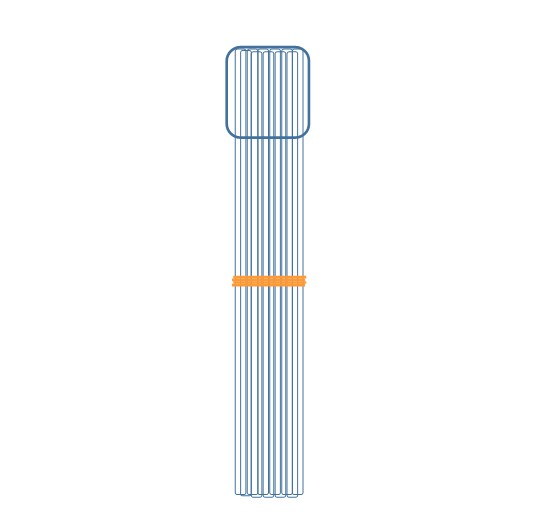
  • Glass Tubings: from each glass tubing obtain 2 samples, of approx. 440 mm length, bottoming on end by using a medium flame to avoid high transforming stress in the glass. Wash samples as per Eu.Ph. and fill with EDTA Solution up to 20 mm under the neck. Group sticks with rubber ring and cover with glass beaker, identifying different samples.

tubings

  • Glass cartridges: select randomly from an adequate number of cartridges, close the bottom with appropriate 3-times autoclaved stopper and wash as per Eu.Ph. and fill with EDTA solution. With pencil identify the sample writing on the beaker external surface, cover the beaker with glass stopper (plate).

crtridges

Once the autoclave is filled with samples, introduce data logger and start sterilizing cycle. At the end of the process, open the autoclave and let sample cooling at natural rate.

  • Glass Tubing: collect 10 ml of extract from each tube in a separate glass beaker, add some drops of Acetic Acid and analyze by AAS.
  • Glass cartridges: collect 10 ml from the set of cartridges, add some drops of Acetic Acid and analyze by AAS.

An appropriate calibrations sets of standards have to be put in place, in the same manner of final sample considering also the acid addition.

Limits

                The obtained results of experimental routine identified a realistic limit of Al concentration leached, valid for AAS and specially for ICP technique, which allow to discriminate among different glass tubing manufacturing processes.

Based on experimental data and repeated tests, the inner surface leaching of Al appears to be as not affected by the converting process (cartridges have not a closed glass bottom) and consequently, if correctly applied, the described methodology results effective on the glass tube and on the cartridges in the same way.

Click here for a free pdf download

Batch Stones: how they appear at Microscope in polarized light, a fast identification method

The Batch stones are a sort of defects they have to be recognised as soon as possible; in fact they are a very important witness of the “health” of melting and fining process, or in other words, of the back side of the glass furnace.

The typical batch stones are essentially constitued by not melted SiO2 sand grains, that due to their lower density, floats over the melt and “runs fast” to the throat. Consequently the presence in the final product of this inclusions, could generate an high level of reject associated to decrease of process yeld (pack to pull) and increase of the scrap.

The Batch stone appears as deep white matt conglomerate, sometimes it could be glossy, other times porous and it cannot be distinguished by other types of inclusion also becoming from cracks of refractory (SiO2 or high mullite construction materials) only by observation.

To obtain a clear identification of stones nature it is necessary to perform an EDS analysis by SEM, but frequently the timing of identification are a key point to take in consideration to speed up the problem solving process and obtain an effective Non-Quality cost saving.

By the experience it is possible to recognise with reliability, this sort of stones only through a quick defect observation with petrographic microscope (microscope in polarized light).

The reasonable identification of batch stone can be performed keeping in mind:

The stone appear as deep white matt inclusion of various dimension.
The Batch stone inclusion is always sorrounded by high numbers of bubbles witness of melting process, related to degradation of raw materials (mostly carbonates and water evaporation).
The stone is included in Silica enriched glass pocket, that generate a “compression stress” visible in polarized light: pockets could be stretched by production process (as in tubular glass) becoming cords.
The Batch Stone inclusions are often associated with an increase of rough, knots and chemical cords that show a compressive stress in polarized light.

Fig1: Batch stones in polarized light

When those defects are correctly identified, the problem resolution could be reached managing a series of set points including thermal profile, bubble rates and other parameters.

Click here for a free pdf download

How tubular glass manufacturing process can affect the final product stability and technological improvement to mitigate it. Al – Epinephrine interaction: a related example.

Al2O3 is one of the primary constituent of Type I glass, commonly used in pharmaceutical glass container manufacturing. The presence of Al2O3 in the glass formulation has a double impact: as glass network former (together with SiO2 is a part of “refractory constituents”) and as network stabilizer giving to Al2O3 containing glass higher chemical resistance lowering the alkaline release.

Clearly Al2O3 is a necessary constituent in the so called “Alumino-Borosilicate glass”, and as Biavati et al (1) showed, Type I glass may produce a sensible release of Al ions in specific conditions. This tendency can subsequently produce a variety of chemical interactions between released Al3+ and constituents of contained drugs that can evolve in complete API degeneration catalyzed by amphoteric nature of Aluminum Ions, depending on the solution pH.

One of interesting API is the Epinephrine / Adrenaline commonly used in combination with Lydocaine in dental anesthetics. Studies on factors that could affect the degradation of Epinephrine stored in glass container  do not give relevant results regarding the role of Al (III) released from the inner surface of glass container(2)(3), but periodical checks of control samples stored showed how Epinephrine effects has been strongly reduced also after months, already with 0,5 ppm of Al in solution: the result is a sensible reduction of anesthetic shelf life (around 1/3) linked to high costs and loss of market appeal.

There are factors that can mitigate glass chemical release and Al as well, such as a correct forming/converting process of the glass and the washing of container before filling.

As long as Al release from converted tubular glass containers is concerned, it has been found that one of the crucial parameter that was not usually considered, is the tubular glass manufacturing process and consequently, the materials the molten glass came in contact with.

In Danner process, the tubing forming is obtained rolling a glass flow on a rotating sleeve generally made in refractory materials such as high Zirconia and/or high Alumina content ones.

800px-danner_process_for_tube_glass_forming-svg

The more advanced technologies, improved the production process in terms of glass quality by using a surface coated sleeve (metalized with Noble metals). Comparing different tubular glass containers obtained in different ways, a model based on Thin film Theory has been hypothesized and than confirmed by experimental data, to explain differences in terms of Al release between coated and uncoated refractory sleeve used.

In particular, the experimental data collected showed that during glass tubing productionit is reasonable to presume, a thin film formation at interface between molten glass that flow over and the refractory sleeve that is rotating underneath (SEM analysis of glass/sleeve interface and EDS analysis of refractory section at various distance from interface shown a distance based Al concentration gradient).

This thin film resulted enriched in Na and in Al, the first moving from the glass where is the more mobile specie which occupy the free space in the glass network, the second moving from the sleeve surface: the driving force in both cases is the concentration gradient (Fick Laws) and the mechanical and thermal aggression made by glass to the refractory surface. Considering the commonType I glassand refractories composition (Al2O3 content is around 5-7 %in the glass and up to 60% in High Al content refractories), it appears clear how the Al migration could create a time based porosity of the sleeve surface that increase the aggression rate. The Alumina migrated from refractory to the glass, tends to occupy the free space present in the structure (considering the relative low viscosity of the glass at the forming point ≈10 4 poise), instead to link with existent network (4). The result is the formation of a thin glass film enriched in very mobile Na and Al that sliding on the sleeve, that concur to originate the inner surface of glass tubing and consequently of the glass container in contact with the contained solution.

The so produced glass tubing shows a higher Na release and, in time, Al release.

The implementation of a metal (noble) coated sleeve technology, is effective not only in terms of Na release (strongly demonstrated by experience) but also for what concern Al release, avoiding the formation of the over mentioned contact between glass and refractory as is and the Al migration at interface.

Comaprison test, made on tubing glass container obtained with coated sleeve, showed a reduction close to90% in terms of Al release.

By the overmentioned consideration it is reasonable to expect that the Glass Tubing production technology commonly known as “Vello”, based on static metallic (metalized) sleeve (no refractory/glass interface at the inner tube surface formation), can give the best performances in terms of Al release and containers obtained from over mentioned tubes could guarantee a long term stability of contained Epinephrine.

220px-vello_process_for_tube_glass_forming-svg

(1) Alberto Biavati; Paolo Amadei – “Significance of Aluminium Release from Type I Borosilicate Glass Containers”Pharmind 2010.pdf

(2) David Stepensky; Michael Chorny; Ziad Dabour; Ilana Schumacher – “Long-term Stability Study of L-Adrenaline Injections: Kinetics of Sulphonation and Racemization Pathways of Drugs Degradation”pdf

(3) O’Conceanainn M; Hines MJ – “The kinetics and mechanism of the reactions of aluminium (III) with gallic acid, gallic acid methyl ester and adrenaline” – J Inorg Biochem, 2001 Mar; 84 (1-2) : 1-12

(4) M. Balconi“Esperienze di attacco sui silicati di alluminio” – Rend. Soc. Min. It. – vol.1, pag. 236

Click here for a free pdf download